
When ICE invaded the city of Minneapolis at the beginning of winter, they behaved as violently and as out of control as they had elsewhere in the country. When thousands of people marched in protest throughout the city, not even a hint of violence emerged from the citizens. They held candlelight vigils. They sang simple songs that expressed the love and peace in their hearts. They sang about how everyone belongs and all are loved. Outside of buildings where those arrested were being held, they sang “Hold on. Hold on, my dear ones. Here comes the dawn.”
To protest the actions of hotel managers who were allowing ICE to stay in their facilities, protesters sang upbeat songs and danced all night outside of those hotels, playing noisy instruments and having fun while keeping hotel guests awake. They also sang, “It’s OK to change your mind. . . Join us anytime.”
Singing together became such an integral part of this peaceful protest that training sessions were held in overflowing halls and churches to teach the songs to others. More and more people joined the marches, singing these gentle, positive songs. Now those songs have spread to New York and other cities threatened with an invasion of ICE squads.
As the ICE troops began to more blatantly attack and arrest protesters, more and more people used their cameras to document incidents. The videos were posted online. When ICE agents tried to stop individuals from filming, people remained calm and stated their rights clearly, retreating only when faced with violence from ICE personnel. Their videos educated people across the country about the violations of civil rights and the unprovoked physical violence against individuals carried out by ICE when anyone challenged them.
Someone brilliant had the idea of printing thousands of whistles on 3-D printers. All across city neighborhoods, whenever an ICE vehicle appeared, neighbors went outside and blew their whistles loudly, over and over, to alert anyone in the vicinity to the presence of ICE. They did not know all their neighbors, they did not know if anyone was in danger, but it was enough to know that no one should be treated the way ICE individuals were treating people.
As time went by, the strength of the effort to show love for all people, everywhere and all the time, turned to finding ways to physically stop ICE without harming anyone. People accompanied minorities who had to walk to work or get to school, forming human shields to protect them from ICE. People worked together to create barricades at the ends of their streets to keep ICE vehicles out of their neighborhoods. Groups of protesters gathered outside the exit to a parking garage, singing their songs, and stood as an immovable block so that ICE vehicles could not leave the garage.
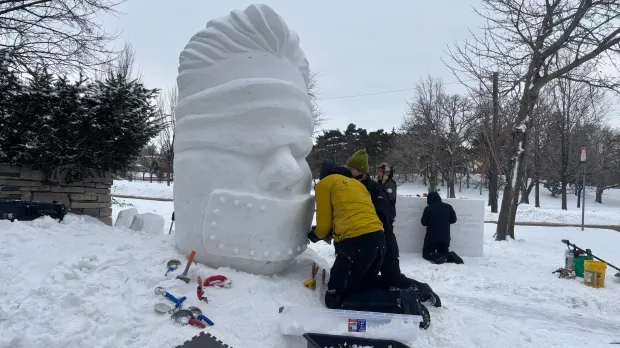
The city of Minneapolis used banners and public art to promote inclusion and love of immigrants and others. When it was time for the St. Paul winter carnival, protesters created sleds out of cardboard and sculptures out of snow that mocked the masked, nameless, faceless beings that haunted the Twin Cities.
All of this echoes what the mayor of Minneapolis and the governor of Minnesota said to reporters over and over: our people are thoroughly rooted in a climate of love and acceptance of all others, and we will not violate that. We will hold fast to our beliefs in welcoming and loving everyone.
ICE has begun to pull hundreds of troops away from Minneapolis. They didn’t know how to behave if they couldn’t threaten and intimidate with weapons and gas cans and pepper spray. The fight to peacefully protect citizens from ICE remains.




Ann Walton Sieber
February 21, 2026 7:13 pmThank you for your thorough and humane description of Minneapolis’s civil response to ICE. Remarkable and instructive “The Nation” magazine nominated Minneapolis for the Nobel Peace Prize. Here in Memphis, we lack anything so beautifully coordinated and nonviolent, although there have been many brave citizens standing up to ICE. It’s eerie how much of a nonevent it can seem when you aren’t in the areas of town and your own friends are not being targeted.