
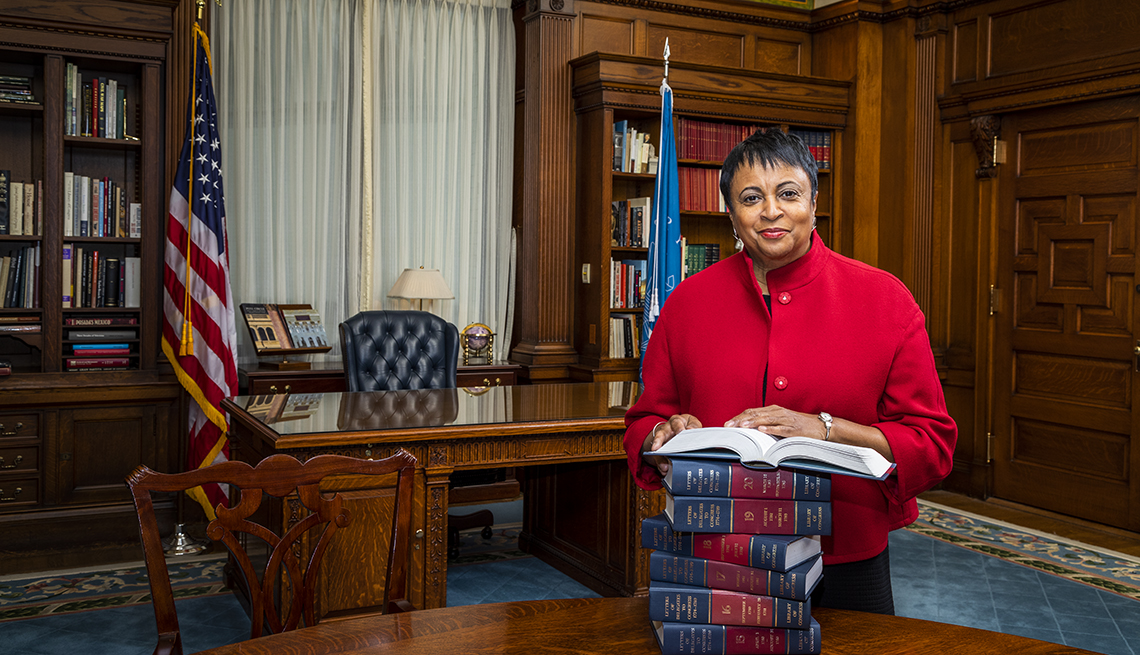
Dr. Carla Hayden used to be the Librarian of Congress, the person in charge of the Library of Congress in Washington, D.C. Recently, conservative (MAGA) groups targeted Dr. Hayden in complaints to the president because they thought the Library of Congress was just a bigger version of their suburban lending libraries. They feared that Dr. Hayden, who is Black, was personally loaning out children’s library books that contained racial and other leftist content that people with the MAGA frame of reference want to erase from our culture. The president fired her.
For almost a decade, Dr. Hayden had been a creative and forward-thinking Librarian of Congress. The Washington institution is typically associated with its charge to provide research services for members of Congress. However, the Library of Congress is the largest library in the world. It houses many special collections, archives, and exhibits that tell the history of this country in a way no textbook can. It covers three separate buildings, each of which has stunning architecture. Dr. Hayden developed the library’s collections, reached out to new audiences, and promoted accessibility for the institution, including online access to exhibits and events.
Great leaders are always finding new and exciting ways to teach. When Dr. Hayden was overseeing the Library of Congress, she filled the calendar with events open to the public. You may have seen the Library of Congress event in which Lizzo played a rare glass flute that belonged to James Madison. This particular event made the nightly news.
I was delighted to learn last week that Dr. Hayden has a new leadership role as a senior fellow at the Mellon Foundation. This philanthropic organization invests in people and organizations that foster creativity and connection through the arts and humanities, and programs that contribute to making our world more just. One of the themes the Mellon Foundation promotes through its grants is what they refer to as “the public knowledge ecosystem.” This includes libraries. Dr. Haden will be advising the Mellon Foundation specifically on “opportunities to advance and support libraries and archives.”
“For generations, libraries, archives, and cultural institutions have been the guardians of knowledge and the catalysts for human progress,” said Dr. Hayden. “At a time when equitable access to information and the free exchange of ideas face significant challenges, I am honored to join the Mellon Foundation as a senior fellow. Together, we will work to strengthen the public knowledge ecosystem and ensure that the transformative power of information remains accessible to all.”
The story of America includes the story of Abraham Lincoln teaching himself to read in a log cabin by candelight, then looking for books wherever he went so that he could keep learning. Our story includes women on horses and pack mules who delivered books to homes and schools throughout Appalachia during World War II. Many of our urban libraries have become heritage sites due to their architecture and the historical collections they developed over time. As Mellon President Elizabeth Alexander said, we have a “profoundly American tradition of freedom to read, learn, and explore the vast knowledge held within our country’s libraries and archives.”
In the online – social media – podcast – scroll through culture of today, the role of libraries remains as important as ever. Many of our congressional representatives rely on their belief system for decision-making and do not hear the concerns of their constituents. The president and his cabinet refuse to consult the facts, gather information, learn history, or conduct research, so they operate in a vacuum of ignorance that keeps causing damage to their efforts and to us. It is up to us to keep ourselves armed with facts, information, and research to mitigate the damage as best we can and to keep building a nation for future generations.
Our local libraries are an essential part of the public knowledge ecosystem. Anyone can go there and sit in comfortable quiet to read newspapers and magazines, to read books, to study and do research. We can use the library’s computers. Lending libraries now offer access to a network of regional libraries so that nearly any book we want, no matter what our interests, is on demand and can be delivered to our local library.
Social media offers just the tip of an informational iceberg. If we want to be fully engaged with learning, it’s time to dust off that library card. Become more of a reader. If you don’t know where to begin among the stacks of books, the sections of children’s literature and young adult books are full of interesting information and riveting stories. Or start with a magazine about something you have a keen interest in – sea kayaking, sheep farming in Ireland, growing orchids. Beyond the reading material, libraries offer a wide range of resources and events that encourage learning and community engagement in the “transformative power of information.”
Notes: